
- The 401(k) Systemic Crisis: Compounding in Reverse
- Modern Tax-Free Retirement Strategies: Protection Meets Growth
- Comparison: Annuity vs. 401(k)
- Tax-Free Retirement Strategies: Escaping the "Tax Trap"
- The Physicians' Roadmap: Bridging the $230,000 Gap
- Staying on Track: The 2026 Checklist
- How do IUL policies differ from 401(k)s in 2026?

About the Author: Sonal Macwan — Certified Financial Professional (CA), [License Number: 4421528] focused on retirement planning, life insurance basics, and long-term financial readiness for mid-career adults.
Education builds clarity. Personalized planning provides direction.
As we navigate the financial landscape of 2026, a “hidden” wealth gap has emerged, separating those who follow traditional retirement advice from those who have adapted to a new era of market volatility and systemic plan failures. To bridge this gap, savvy investors are turning toward tax-free retirement strategies and indexed financial products. From excessive fees that act as “compounding in reverse” to the systemic inclusion of inferior investment options, the traditional 401(k) model is under fire.
To bridge this gap, savvy investors are turning toward tax-free retirement strategies and indexed financial products that offer principal protection and guaranteed income. This blog post explores why the 401(k) is no longer the “gold standard” and how new indexed strategies are paving a clearer path to early retirement.
The 401(k) Systemic Crisis: Compounding in Reverse
The most pervasive issue facing 401(k) participants today is the silent erosion of wealth caused by excessive fees. These costs are not merely administrative nuisances; they represent a significant drain on long-term returns. Analysis of over 3,500 plans found that average fees lead to costs 78 basis points higher than comparable index funds.
The impact of these fees is devastating. In approximately 16% of analyzed plans, the fees are so high that they effectively consume the entire tax benefit provided by the 401(k) for young employees. This means that for nearly one in six workers, the “advantage” of a tax-advantaged account is completely neutralized by the cost of the plan itself. Furthermore, over 52% of 401(k) plans include “dominated funds”—expensive options that charge significantly higher fees (at least 50 basis points) than comparable marketplace funds without offering any additional diversification benefit.
The Pervasive Impact of Excessive Fees
Excessive fees represent a fundamental systemic failure, acting as “compounding in reverse”.
- Tax Benefit Erosion: In approximately 16% of analyzed plans, fees are so high that they effectively consume the entire tax benefit of the 401(k) for young employees.
- Market Underperformance: Most actively managed funds in 401(k) menus fail to beat index funds; roughly 85% of U.S. large-cap active funds lagged the S&P 500 over a ten-year period.
- The Cost of “Choice”: On average, fees and menu restrictions in 401(k) plans lead to a cost 78 basis points higher than that of retail index funds.
The Behavioral Trap
The wealth gap is further widened by known investor behaviors that the 401(k) system often exploits. Many participants utilize a “1/N heuristic,” or naïve diversification, where they spread their contributions equally across all funds offered in a menu regardless of quality. Because many menus are cluttered with high-cost dominated funds, this behavior predictably induces participants to lose money. Courts often protect plan sponsors through the “large menu defense”, shielding them from liability for offering bad funds as long as a few good ones are present, even though fiduciaries know participants will likely select the low-quality options.

Modern Tax-Free Retirement Strategies: Protection Meets Growth
Given the structural flaws in many employer-sponsored plans, a new strategy has gained momentum in 2026: the use of indexed financial products. Whether through Fixed Indexed Annuities (FIAs) or indexed-linked insurance products, these vehicles address the two greatest fears of modern retirees: market volatility and outliving their money.
💰How to Build Tax-Free Retirement Income with IUL (2026 Guide)
Principal Protection from Market Downturns
One of the unique advantages of a fixed indexed annuity is that it does not directly participate in the stock market. Instead, it offers growth potential based on the upward movement of an external market index while protecting the principal from loss during downturns. In a volatile 2026 market, the “zero is your hero” philosophy ensures that while a participant might earn zero interest in a flat or down year, they will never earn less than zero due to market performance.

Indexed Universal Life (IUL) 2026 Context
While annuities provide a stream of income, permanent life insurance—including indexed strategies like IUL—is increasingly used as a cornerstone for tax-free retirement strategies. By combining the growth potential of an indexed account with the tax advantages of life insurance, investors can build a bucket of money that is accessible without the RMD (Required Minimum Distribution) requirements that plague traditional IRAs and 401(k)s. For high earners, this provides a vital “tax-free” bucket to hedge against future tax rate increases.
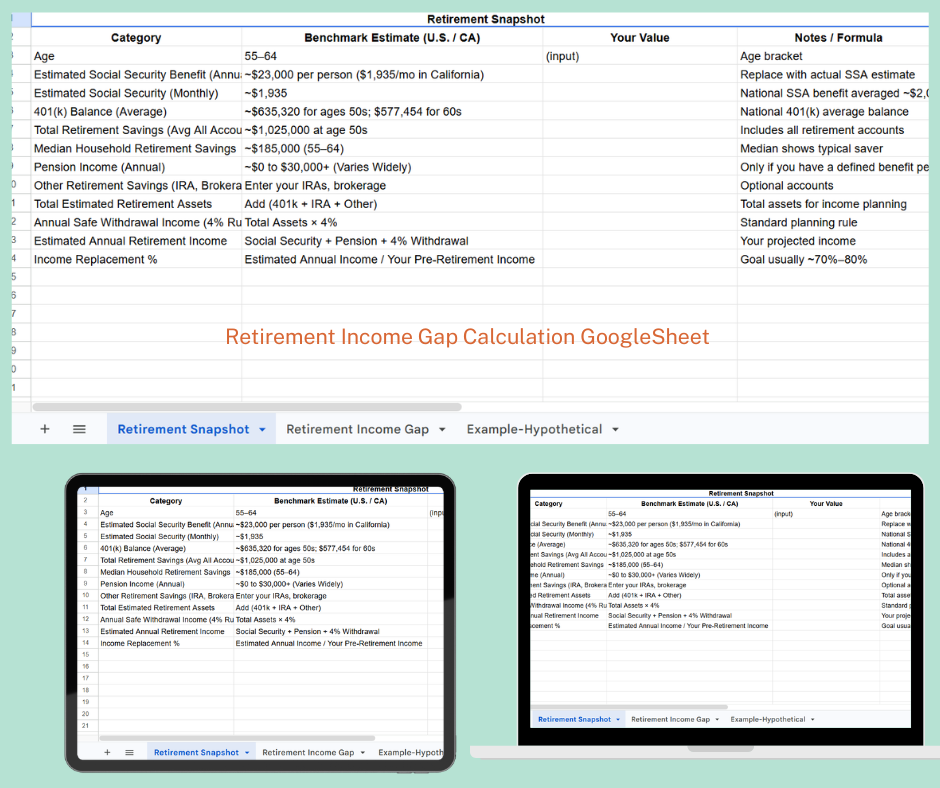
Comparison: Annuity vs. 401(k)
When mapping a path to a confident retirement, it is essential to compare the traditional 401(k) with alternative vehicles like annuities.
| Feature | Traditional 401(k) | Fixed Indexed Annuity (FIA) |
| Market Risk | Full exposure to volatility | Principal protected from downturns |
| Fees | Often high/hidden; can eat tax benefits | Varies; typically focused on insurance guarantees |
| Income | Payout depends on balance/withdrawals | Guaranteed lifetime income options |
| Taxation | Taxed as ordinary income at withdrawal | Tax-deferred growth; taxation depends on funding |
| RMDs | Required starting at age 73 | Required on qualified money; not on non-qualified |
The 401(k) is an effective tool for capturing an employer match—which is essentially “free money”—but it often lacks the ability to create a guaranteed income stream that lasts for decades. In contrast, annuities serve as insurance against longevity risk (the risk of outliving your money), which is a growing concern as lifespans increase.
Tax-Free Retirement Strategies: Escaping the “Tax Trap”
A critical, yet often overlooked, component of the wealth gap is the age 73 “tax trap.” For high-earning professionals, such as physicians, a massive 401(k) balance can become a liability later in life. When Required Minimum Distributions (RMDs) begin at age 73, they can push a retiree’s income high enough to trigger:
- Social Security Taxation: Up to 85% of Social Security benefits become taxable.
- Medicare IRMAA Surcharges: Monthly premiums can skyrocket, adding thousands in annual costs.
This can lead to effective marginal tax rates near 40%. To combat this, comprehensive retirement planning now emphasizes Roth conversions and Roth IRAs. Unlike traditional accounts, Roth IRAs have no RMDs during the owner’s lifetime, and qualified withdrawals are entirely tax-free. Utilizing these tax-free strategies in the “window” between retirement and age 73 can significantly preserve a nest egg.
The Physicians’ Roadmap: Bridging the $230,000 Gap
The failures of the traditional system are most visible when looking at early retirement for high-income earners. A physician retiring at age 62 with a $500,000 401(k)—a balance many assume is substantial—will only generate roughly $20,000 per year at a standard 4% withdrawal rate.
Against an annual lifestyle spending requirement of $250,000, this leaves a $230,000 annual gap. Furthermore, early retirees must cover significant costs before Medicare kicks in at age 65, including:
- Healthcare Premiums: Approximately $30,000 per year.
- Malpractice Tail Coverage: Ranging from $20,000 to $60,000.
Sustainable early retirement for this demographic actually requires a portfolio between $6.25 million and $8.33 million to safely cover expenses without exhausting the principal. This “Number That Actually Matters” highlights the difference between merely saving and having a true expense coverage plan.
Long-Term Security: Final Expense Protection
As part of a holistic 2026 financial plan, participants are increasingly looking at Final Expense protection as a long-tail necessity. Often a specialized form of permanent life insurance, final expense coverage ensures that the costs of one’s passing do not become a burden to survivors. While it may seem like a small detail compared to a multi-million dollar 401(k), it is a vital layer of a diversified protection strategy that includes annuities for income, IRAs for growth, and life insurance for legacy.
Staying on Track: The 2026 Checklist
The “set it and forget it” mentality is a primary reason for the widening wealth gap. A successful retirement requires regular checkups to ensure your plan evolves with your life. Experts recommend revisiting your plan annually or after major life events, such as a job change or a health diagnosis.
Key Reasons to Update Your Plan:
- Assumption Reality Check: If your plan assumes a 7% return, it may not account for the high-fee drag or market volatility common in 2026.
- Healthcare Inflation: Once you turn 55, healthcare costs can increase by 50% or more compared to your younger years.
- Asset Allocation: As you near retirement, your assets should generally become less risky to protect against a market downturn right before you need the income.
- Forgotten Accounts: Approximately 1 in 5 U.S. workers have left behind or forgotten retirement accounts when changing jobs, leaving funds in inactive plans that are not being optimized.
How do IUL policies differ from 401(k)s in 2026?
Based on the sources and our conversation history, Indexed Universal Life (IUL) policies and 401(k) plans represent two fundamentally different approaches to retirement in 2026, primarily differing in their tax treatment, market risk exposure, and regulatory requirements like Required Minimum Distributions (RMDs).
1. Taxation and the “Age 73 Tax Trap”
A primary difference in 2026 is how these vehicles interact with the tax system during the distribution phase.
- 401(k) Plans: Contributions and earnings are typically tax-deferred, meaning they are taxed as ordinary income upon withdrawal. A significant systemic issue in 2026 is the “Tax Trap” at age 73, where RMDs can push retirees into higher tax brackets, trigger Social Security taxation (where 85% of benefits become taxable), and lead to high Medicare IRMAA surcharges. This can result in effective marginal tax rates near 40%.
- IUL Policies: As a form of permanent life insurance, IULs are often utilized for tax-free retirement strategies. Unlike 401(k)s, they typically do not have RMD requirements, allowing for greater control over taxable income and helping to avoid the 2026 tax traps associated with Social Security and Medicare.
2. Market Risk vs. Principal Protection
The two vehicles offer different levels of security against market volatility, which is a top concern for Americans in 2026.
- 401(k) Plans: Assets are directly exposed to market volatility. While they offer high growth potential, participants risk sustaining losses they cannot recover before retirement if the market turns aggressively right before they need the income.
- IUL Policies: These fall under the category of indexed strategies. Similar to Fixed Indexed Annuities (FIAs) described in the sources, IULs provide growth potential based on an external market index while protecting the principal from market downturns. In these indexed products, while interest might be zero in a down year, the account “never earns less than zero,” providing a floor against market loss.
3. Fees and Systemic Issues
Many financial reports show that 401(k) plans are currently plagued by structural inefficiencies that may not exist in the same way for private insurance contracts.
- 401(k) Plans: Many plans suffer from excessive fees, averaging 78 basis points higher than index funds. Furthermore, over 52% of plans include “dominated funds”—expensive options that offer no unique diversification benefit—which can erode the entire tax benefit of the plan for younger employees.
- IUL Policies: While insurance contracts have their own internal charges and “cap rates” that limit interest, they are not subject to the same “large menu defense” or revenue-sharing conflicts that lead to the inclusion of dominated funds in 401(k) menus.
4. Funding Gaps and “The Number That Actually Matters”
In the context of early retirement (such as for physicians), a 401(k) often fails to bridge the necessary income gap.
- 401(k) Limitations: A typical $500,000 401(k) only generates about $20,000 per year at a standard 4% withdrawal rate. This often leaves a massive annual gap—sometimes over $230,000—for those with high lifestyle spending needs.
- IUL and Annuities: These are often used as supplementary income sources to fill those gaps and provide a “secure, sustainable income” that can last for decades, protecting against longevity risk (outliving your money).
Summary Comparison Table
| Feature | Traditional 401(k) | Indexed Universal Life (IUL) |
| Market Risk | Full exposure to volatility | Principal protected; floor of 0% |
| RMDs | Required at age 73 | Generally none |
| Tax Status | Tax-deferred (taxed at withdrawal) | Potential for tax-free access |
| Unique Benefit | Potential for employer match | Death Benefit and legacy creation |
Conclusion: Closing the Gap
The traditional 401(k) is no longer a guaranteed ticket to a remarkable retirement. With systemic issues like dominated funds and excessive fees, participants must take an active role in their financial destiny. By integrating tax-free retirement strategies, leveraging the principal protection of fixed indexed annuities, and ensuring long-term security through Final Expense protection, you can close the hidden wealth gap. The path to a confident retirement isn’t found in a single account, but in a diversified income strategy that balances growth, protection, and tax efficiency. Talk to a financial professional today to discover your retirement personality and determine if rolling over an underperforming 401(k) into an indexed strategy is the right move for your future.
This content is provided for educational and informational purposes only and is not intended as financial, legal, tax, or investment advice.
What is Google Workspace?
Google Workspace is a cloud-based productivity suite that helps teams communicate, collaborate and get things done from anywhere and on any device. It’s simple to set up, use and manage, so your business can focus on what really matters.
Watch a video or find out more here.
Business email for your domain
Look professional and communicate as you@yourcompany.com. Gmail’s simple features help you build your brand while getting more done.
Access from any location or device
Check emails, share files, edit documents, hold video meetings and more, whether you’re at work, at home or on the move. You can pick up where you left off from a computer, tablet or phone.
Enterprise-level management tools
Robust admin settings give you total command over users, devices, security and more.
Sign up using my link Google Workspace Referral Link and get a 14-day trial, and message me to get an exclusive discount when you try Google Workspace for your business.
Start Your Free 14-Day Trial