
A practical, expert-informed guide for singles, couples, and families
Retirement planning is not a one-time activity—it’s a continuous, strategic process involving financial discipline, risk management, and life-stage adjustments. Below is a structured, easy-to-follow Retirement Planning Checklist tailored for different life situations.

About the Author: Sonal Macwan — Certified Financial Professional, focused on retirement planning, life insurance basics, and long-term financial readiness for mid-career adults. Content is educational, not legal or financial advice.
Education builds clarity. Personalized planning provides direction.
🧱 1. Foundation: Core Steps (For Everyone)
✔ Define Your Retirement Vision
- Desired retirement age (e.g., 55, 60, 65)
- Lifestyle expectations (travel, hobbies, relocation)
- Expected monthly expenses in retirement
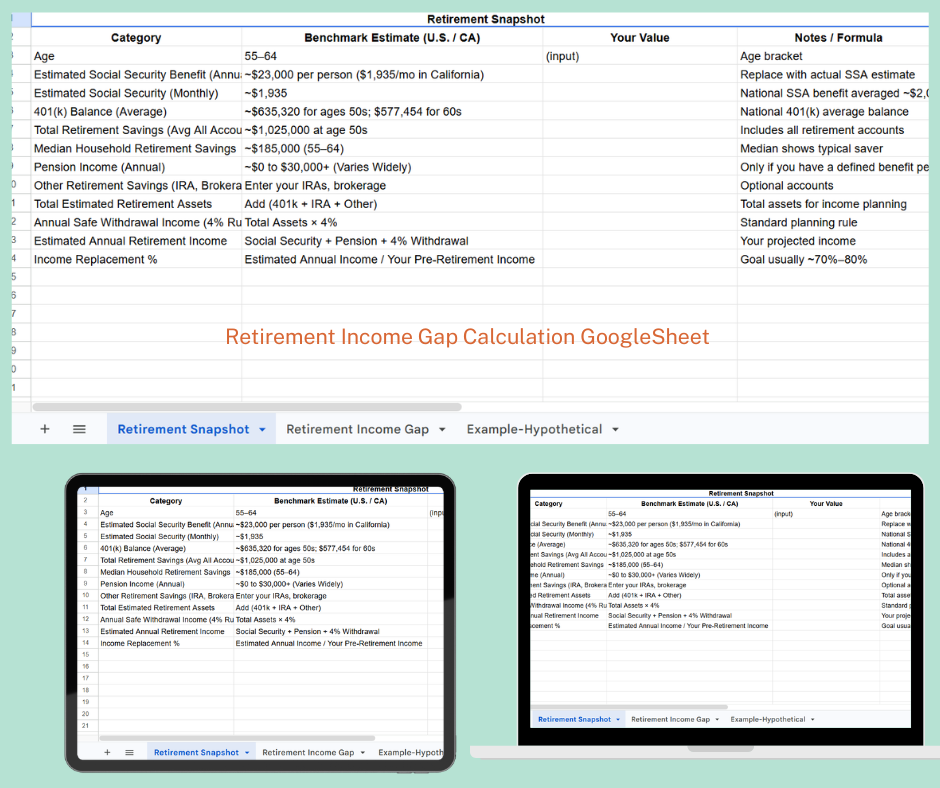
✔ Calculate Retirement Corpus
- Estimate annual expenses × years in retirement
- Adjust for inflation (typically 5–7%)
- Include healthcare and long-term care costs
✔ Build a Diversified Investment Portfolio
- Equity (growth)
- Debt (stability)
- Retirement accounts (401(k), IRA, pension)
- Real estate or alternative investments
✔ Emergency Fund
- Maintain 6–12 months of expenses
- Separate from retirement investments
✔ Insurance Coverage
- Health insurance (critical)
- Life insurance (if dependents exist)
- Disability insurance (income protection)
👤 2. Checklist for Singles (No Dependents)
🎯 Financial Focus
- Maximize retirement contributions early
- Build aggressive growth portfolio (higher equity exposure)
✔ Key Actions
- Contribute to retirement accounts (target: 15–25% of income)
- Eliminate high-interest debt
- Create a will and assign beneficiaries
- Plan for solo retirement (housing, healthcare support)
⚠️ Risks to Watch
- Lack of support system in old age
- Underestimating healthcare costs
👨👩👧 3. Checklist for Families with College-Going Kids
Working professionals with families juggles with a lot of responsibilities. They are sandwich generation between their own careers and planning for their kids’ college and future. They need this retirement planning checklist the most, to make it a priority and not a put-aside task list.
🎯 Financial Balancing Act
You are managing:
- Retirement savings
- Children’s education expenses
✔ Key Actions
- Prioritize retirement over education loans
- Kids can take loans, you cannot borrow for retirement
- Create separate funds:
- Retirement fund (non-negotiable)
- Education fund (529 plan or equivalent)
✔ Budget Planning
- Tuition, accommodation, and inflation-adjusted costs
- Avoid withdrawing from retirement accounts early
✔ Protection Planning
- Adequate term life insurance (10–15x income)
- Health insurance for entire family
⚠️ Risks to Watch
- Delaying retirement savings for children’s education
- Over-reliance on future income growth
💑 4. Retirement Planning Checklist for Married Couples (Dual Income)
🎯 Strategic Advantage: Two incomes = higher potential savings
✔ Coordination Steps
- Align retirement goals (age, lifestyle)
- Combine and optimize investments
- Avoid duplication of insurance
✔ Investment Strategy
- One aggressive portfolio + one conservative (risk balancing)
- Maximize employer benefits (401k match, pensions)
✔ Estate Planning
- Joint assets
- Nominees and beneficiaries
- Power of attorney

⚠️ Risks to Watch
- Lack of coordination → inefficient savings
- Overconfidence in dual income stability
California Retirement Calculator
Your Projection (inflation-adjusted)
- Years to retirement: —
- Projected nest egg at retirement: —
- Income from portfolio (per month): —
- + Social Security (per month): —
- Estimated taxes (per month): —
- Estimated take-home (per month): —
What this assumes
- Contributions and returns compound monthly.
- Returns are converted to “real” (after inflation) for purchasing-power comparisons.
- SWR is applied to the inflation-adjusted nest egg.
- This is an educational estimate, not financial advice.
👴 5. Pre-Retirement (Age 50+)
🎯 Shift from Growth to Preservation
✔ Key Actions
- Increase contributions (catch-up contributions)
- Reduce high-risk investments gradually
- Pay off major debts (mortgage, loans)
✔ Income Planning
- Estimate retirement income streams:
- Pension
- Social security
- Investment income
- Plan withdrawal strategy (4% rule guideline)
✔ Healthcare Planning
- Long-term care insurance
- Medical contingency fund
📊 6. Annual Retirement Review Checklist
✔ Review portfolio performance
✔ Rebalance asset allocation
✔ Increase contributions with salary growth
✔ Update beneficiaries and legal documents
✔ Adjust for inflation and lifestyle changes
⚙️ 7. Common Mistakes to Avoid
❌ Starting late
❌ Underestimating inflation
❌ Ignoring healthcare costs
❌ Over-investing in low-return assets
❌ Withdrawing retirement funds early
🧠 Expert Tips (High-Impact Strategies)
- Start early → compounding is your biggest advantage
- Automate investments → consistency beats timing
- Diversify globally → reduce concentration risk
- Plan taxes → use tax-advantaged accounts
- Think longevity → plan for 25–30 years post-retirement
📌 Simple Rule of Thumb
- Save at least 15–25% of income
- Aim for 25–30× annual expenses as retirement corpus
- Maintain balanced asset allocation based on age
🚀 Next Step (Very Important)
Explore Financial Planning Resources
Financial clarity improves when you have the right tools and explanations in one place. Explore our curated resources to better understand life insurance, retirement planning, and wealth-building strategies—designed to support informed, confident financial decisions.
Visit the Resources Page →- Build a personalized retirement plan based on your income and goals. Talk to a licensed financial professional
- Create a Social Security account to know what to expect as your social security check.
This content is provided for educational and informational purposes only and is not intended as financial, legal, tax, or investment advice.
A retirement planning checklist is useful only if it’s executed properly. Structured financial roadmap is where real execution begins. Below is a timeline-driven, actionable retirement roadmap designed for working professionals, adaptable for singles, couples, and families.
🧭 Retirement Financial Roadmap (With Timelines & Tasks)
🟢 Phase 1: Early Career (Age 20–35)
Objective: Build strong financial foundation + maximize compounding
📅 Monthly Tasks
- Save 15–25% of income
- Automate investments into:
- 401(k) / IRA
- Index funds / ETFs
- Track expenses (budget discipline)
📅 Quarterly Tasks
- Review investment allocation (target: 70–90% equity)
- Increase contributions with salary raises
📅 Annual Tasks
- Max out retirement contributions (if possible)
- Review insurance coverage (basic health + term life if needed)
- Set or update financial goals
🎯 Milestones
- Emergency fund (6–12 months)
- Zero high-interest debt
- First $100K invested
🔵 Phase 2: Growth & Responsibility (Age 35–50)
Objective: Scale wealth + balance family responsibilities
📅 Monthly Tasks
- Continue 15–25% savings rate
- Allocate funds across:
- Retirement
- Kids’ education (if applicable)
- Mortgage / lifestyle
📅 Quarterly Tasks
- Portfolio rebalancing (60–75% equity)
- Track education fund growth vs target
📅 Annual Tasks
- Increase insurance:
- Life (10–15× income)
- Family health coverage
- Tax optimization review
- Update estate planning documents
👨👩👧 Additional Tasks (Families with Kids)
- Open/manage education fund (e.g., 529 plan)
- Forecast college costs (inflation-adjusted)
- Avoid dipping into retirement savings
🎯 Milestones
- 3–5× annual income saved
- Education fund on track (if applicable)
- Mortgage under control
🟠 Phase 3: Pre-Retirement (Age 50–60)
Objective: Protect wealth + prepare income streams
📅 Monthly Tasks
- Maximize “catch-up” contributions
- Reduce discretionary spending
📅 Quarterly Tasks
- Rebalance portfolio (40–60% equity)
- Stress-test retirement scenarios
📅 Annual Tasks
- Eliminate major debts
- Review retirement income projections:
- Pension
- Social Security
- Investment withdrawals
- Strengthen healthcare planning
🎯 Milestones
- 10–20× annual expenses saved
- Debt-free (or minimal debt)
- Clear retirement income plan
🔴 Phase 4: Retirement Transition (Age 60–65)
Objective: Shift from accumulation → income generation
📅 Key Tasks (One-Time + Annual)
- Finalize retirement date
- Create withdrawal strategy (e.g., 4% rule)
- Allocate assets:
- 30–50% equity
- 50–70% income-generating assets
📅 Annual Tasks
- Optimize tax withdrawals
- Review healthcare & long-term care plans
- Update estate and legacy planning
🎯 Milestones
- Fully funded retirement corpus
- Predictable income streams established
⚫ Phase 5: Post-Retirement (65+)
Objective: Sustain income + preserve wealth
📅 Monthly Tasks
- Monitor expenses vs withdrawals
- Maintain liquidity for emergencies
📅 Quarterly Tasks
- Review portfolio performance
- Adjust withdrawals if needed
📅 Annual Tasks
- Rebalance portfolio
- Review healthcare costs
- Update estate plans
🎯 Milestones
- Sustainable withdrawal rate (no depletion risk)
- Healthcare fully covered
- Legacy plan in place
📊 Simplified Timeline Overview
| Age Range | Focus | Savings Target | Risk Level |
|---|---|---|---|
| 20–35 | Build & Grow | 1–3× income | High |
| 35–50 | Scale & Balance | 3–8× income | Moderate-High |
| 50–60 | Protect & Prepare | 10–20× expenses | Moderate |
| 60–65 | Transition | Fully funded | Moderate-Low |
| 65+ | Sustain | Preservation | Low |
⚙️ Task Management System (Execution Layer)
To make this actionable, here’s a simple structure you can follow:
🗂 Weekly (10–15 min)
- Track expenses
- Check investment contributions
🗂 Monthly (30–60 min)
- Review savings rate
- Adjust budget if needed
🗂 Quarterly (1–2 hrs)
- Portfolio review & rebalancing
- Goal progress check
🗂 Annual (Half day)
- Full financial review
- Tax + insurance optimization
- Update long-term projections
🧠 Strategic Insights (Advisor Perspective)
- Singles: Take more calculated risk early; plan for solo retirement support
- Families: Never compromise retirement for education funding
- Dual-income couples: Optimize jointly—avoid redundant investments
- Pre-retirees: Focus on downside protection, not aggressive growth