
Retirement & Income Planning: How to Build Reliable Income for Life 💰📝
Retirement is no longer just about stopping work. It is about replacing income, managing risk, and ensuring your money lasts as long as you do.
Yet many people approach retirement planning backwards — focusing on investments without understanding how income will actually be generated.
This guide explains retirement and income planning from the ground up, including strategies, tools, risks, and common mistakes, so you can make informed decisions with confidence.
What Is Retirement & Income Planning?
Retirement and income planning is the process of creating a structured strategy to generate reliable income during retirement, while managing risks such as:

- Longevity (outliving your money)
- Market volatility
- Inflation
- Taxes
- Healthcare and long-term care costs
Unlike accumulation planning (saving and investing), income planning focuses on distribution — how and when money is withdrawn, and from which sources. Retirement and income planning does not exist in isolation. It is most effective when aligned with long-term wealth building and financial planning strategies that consider growth, protection, and legacy together.
The goal is simple:
Maintain your lifestyle without running out of money.
Why Retirement Income Planning Is More Important Than Ever
Traditional pensions are rare. Social Security was never designed to be a full income replacement. And market volatility can derail poorly planned withdrawals.
Retirement Readiness Quick Quiz for Working Women in California
Today’s retirees face:
- Longer life expectancy
- Higher healthcare costs
- Greater responsibility for managing income
- Fewer guaranteed income sources
That makes retirement income planning not optional — but essential.
The Core Sources of Retirement Income
Most retirement income plans rely on a combination of these sources:
1. Social Security Benefits
Social Security provides a base layer of guaranteed lifetime income, but claiming decisions significantly impact benefits.
Key considerations include:
- Claiming at 62 vs full retirement age vs 70
- Survivor and spousal benefits
- Taxation of benefits
Social Security works best when coordinated with other income sources — not used alone.
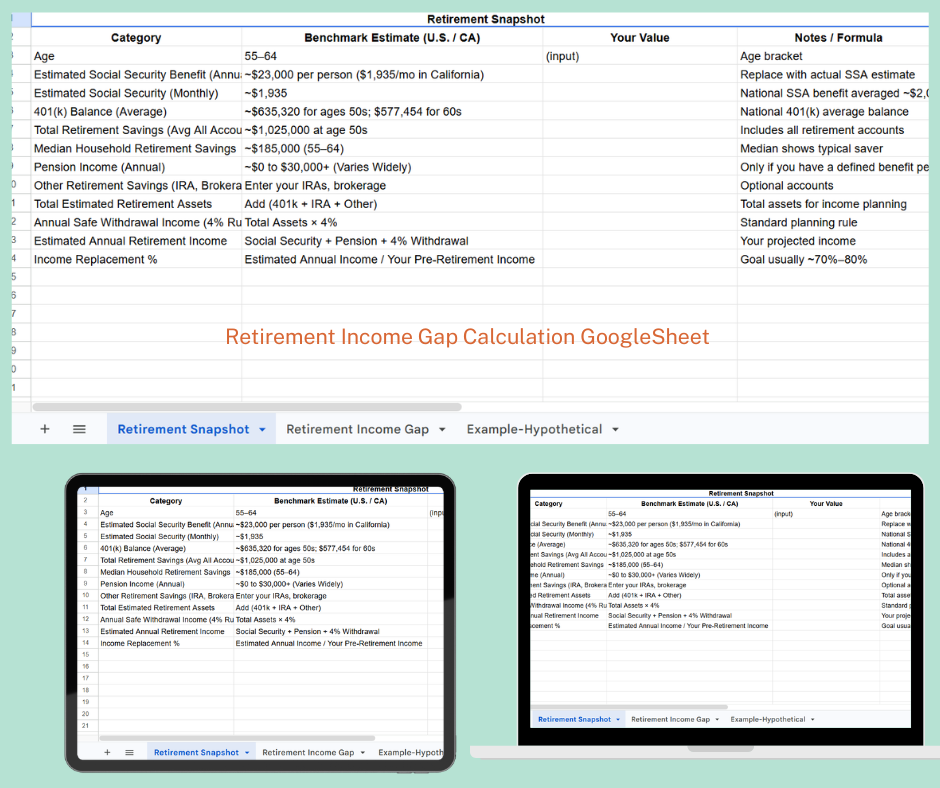
2. Employer Retirement Accounts (401(k), 403(b), TSP)
These accounts often form the largest portion of retirement savings, but they do not automatically produce income.
Income risks include:
- Market downturns during withdrawals
- Required Minimum Distributions (RMDs)
- Sequence-of-returns risk
Proper withdrawal strategies matter just as much as investment selection.
3. IRAs (Traditional & Roth)
IRAs provide flexibility and tax-planning opportunities.
- Traditional IRAs are tax-deferred but taxable at withdrawal
- Roth IRAs offer tax-free qualified distributions
- Roth assets are powerful tools for tax diversification in retirement
4. Annuities and Guaranteed Income Products
Annuities can provide predictable income, helping reduce longevity and market risk.
Used correctly, annuities can:
- Supplement Social Security
- Create pension-like income
- Reduce reliance on market withdrawals
They are tools — not solutions — and must be evaluated carefully.

5. Life Insurance in Retirement Planning
Life insurance should be evaluated carefully based on policy type, funding structure, and long-term objectives. Reviewing different types of life insurance and how they work provides essential context before integrating insurance into a retirement strategy.
Permanent life insurance may play a role in:
- Legacy planning
- Tax-efficient income strategies
- Estate liquidity
- Risk management
Life insurance should support retirement goals, not replace sound income planning. Permanent life insurance may play a role in retirement by supporting legacy goals, tax efficiency, and estate liquidity. Understanding how life insurance fits into a retirement income plan can help determine whether insurance is a strategic tool or simply a protection product.
Retirement Income Planning Strategies
There is no single “best” strategy. Effective plans blend multiple approaches.
Systematic Withdrawal Strategy
- Withdraw a set percentage annually
- Simple, but vulnerable to market downturns
Bucket Strategy
- Short-term cash bucket
- Medium-term conservative bucket
- Long-term growth bucket
This approach helps manage volatility and emotional decision-making.
Guaranteed Income Floor Strategy
This strategy covers essential expenses with guaranteed income sources such as:
Discretionary spending is then supported by market-based assets.
Common Retirement Risks (And How to Plan for Them)
Longevity Risk
People underestimate how long retirement can last. Planning to age 90–95 is prudent.
Retirement Strategy Decision Tool
Answer a few questions to see which retirement options may fit you.
1️⃣ Are you currently working and earning income?
2️⃣ Does your employer offer a 401(k)?
3️⃣ Are you contributing enough to get the full employer match?
4️⃣ Have you maxed out your 401(k) contributions?
5️⃣ Do you want guaranteed lifetime income in retirement?
Market Risk
Market downturns early in retirement can permanently damage income sustainability.
Inflation Risk
Even modest inflation erodes purchasing power over time, especially healthcare costs.
Tax Risk
Poor tax planning can significantly reduce net retirement income.
Managing these risks requires coordination — not isolated decisions.
Retirement & Income Planning vs Investment Planning
| Investment Planning | Income Planning |
|---|---|
| Focuses on growth | Focuses on sustainability |
| Pre-retirement | Post-retirement |
| Market-driven | Strategy-driven |
| Performance-based | Outcome-based |
Successful retirement planning integrates both — but prioritizes income security once retirement begins.
When Should You Start Retirement Income Planning?
Ideally:
- 10–15 years before retirement for optimal flexibility
- At retirement for income structuring
- Even after retirement to improve efficiency and reduce risk
It is never “too late,” but earlier planning provides more options.
Mistakes to Avoid in Retirement & Income Planning
- Relying solely on Social Security
- Ignoring taxes in withdrawal planning
- Treating retirement like an investment problem only
- Underestimating healthcare costs
- Making decisions without a written plan
Education and planning reduce costly mistakes.
The Role of a Retirement Planning Professional
A qualified retirement professional can help:
- Coordinate income sources
- Model multiple scenarios
- Stress-test plans against market and longevity risks
- Align retirement income with broader wealth goals
Professional guidance adds clarity — not complexity.
Final Thoughts: Retirement Is About Income, Not Just Assets
Retirement success is not measured by account balances — it is measured by income reliability, flexibility, and peace of mind.
Annuities can provide guaranteed retirement income—here’s how they work.
A strong retirement and income plan:
- Replaces your paycheck
- Protects against uncertainty
- Supports your lifestyle
- Adapts as life changes

Education builds clarity. Personalized planning provides direction. If you want to understand how these strategies apply to your financial goals, a thoughtful review can help you move forward with confidence.
Explore Your OptionsWhether you are approaching retirement or already there, understanding how income works is the foundation of financial confidence. A strong retirement plan balances income security with flexibility and long-term objectives. Aligning retirement income with wealth preservation, income planning, and legacy goals helps ensure financial decisions remain cohesive over time.